What builds trust in a high-value decision
Before someone commits to a mortgage, they have to trust the experience. A five-second one-click test across five competitor sites found that the element teams reach for first is the one that costs them trust later.
The question
The client wanted to know what specifically builds trust in a competitor's mortgage shopping experience, and what to bring into their own.
Approach
Participants who had shopped for a mortgage in the prior thirty days selected which competitor site they had used and trusted most. They were then shown a screenshot of that site and given five seconds to click the single element that built trust for them, followed by open response questions to build context around the click.
Five-second exposure isolates gut reaction. Open response afterward explains it. The pairing gives you both the behavior and the reasoning behind it.
Competitor distribution matched expectations: Credit Karma at 41%, NerdWallet at 21%, Bankrate at 20%, Better at 8.1%, Rate at 7.1%.
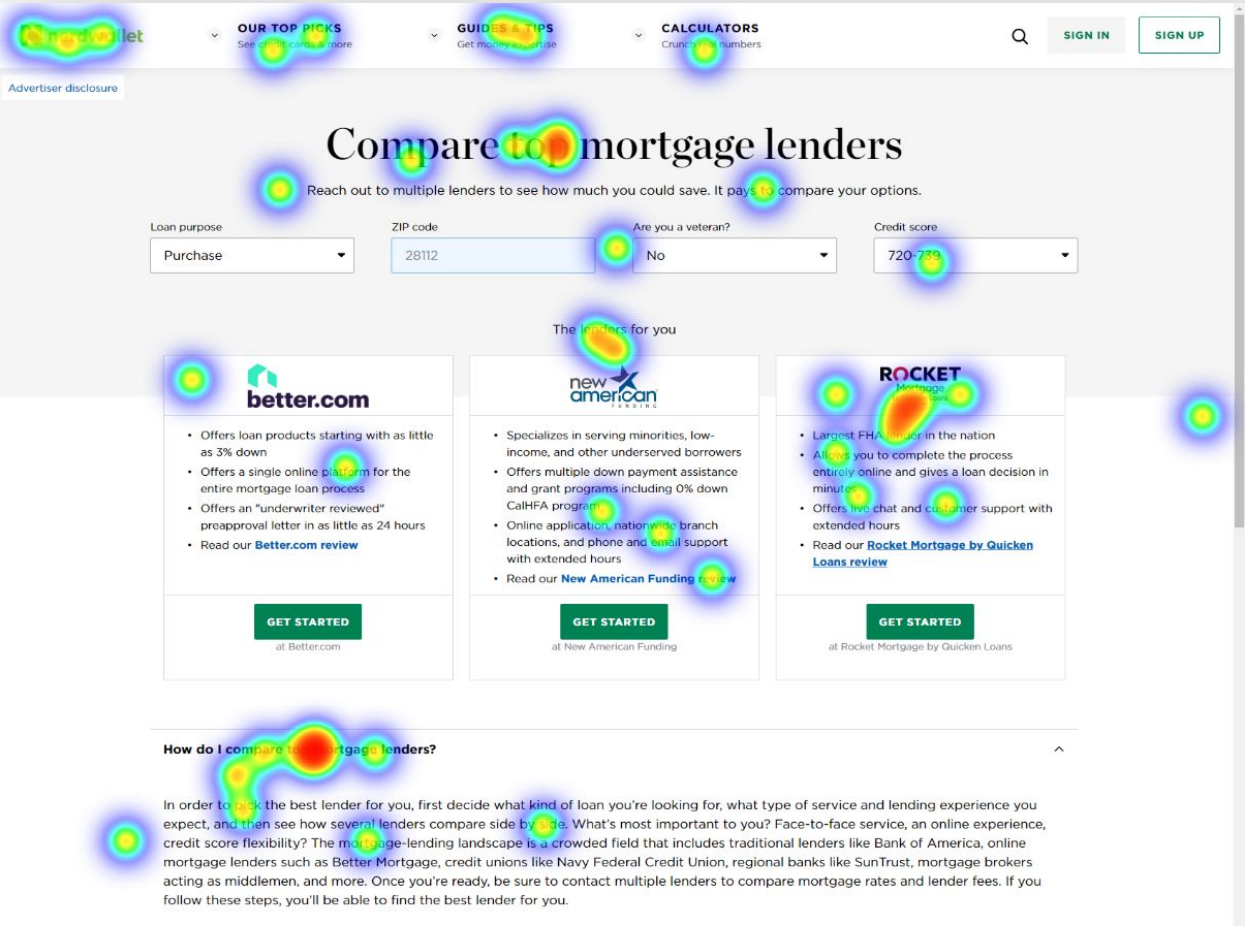
A representative competitor experience. Clicks spread across navigation, lender name cards, and the educational how to compare section at the foot of the page.
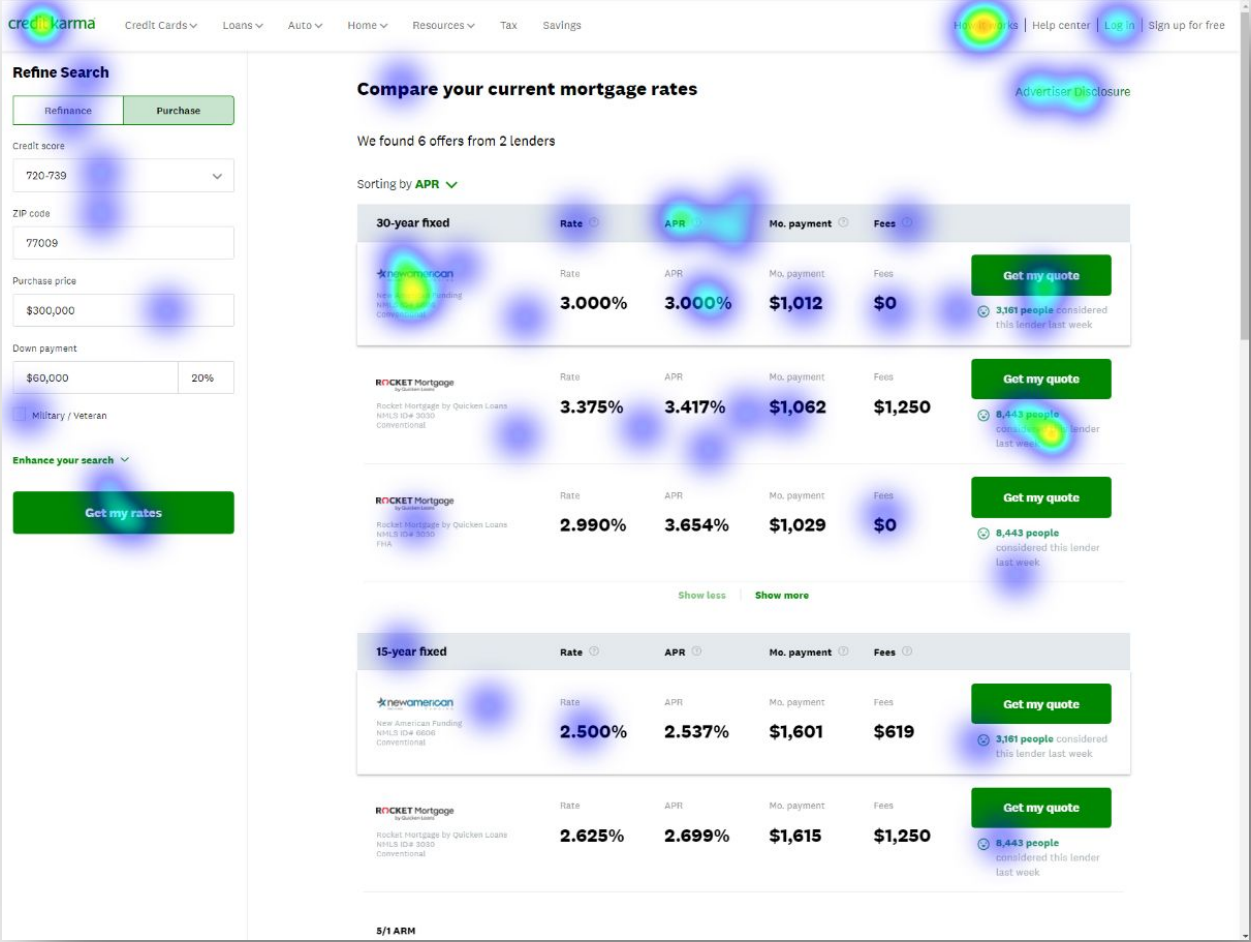
Five-second one-click heatmap. Clicks cluster on rates, APR, and quote CTAs, the exact numbers that change once a user enters personal information.
Contextual numbers are a trust liability, not a trust asset
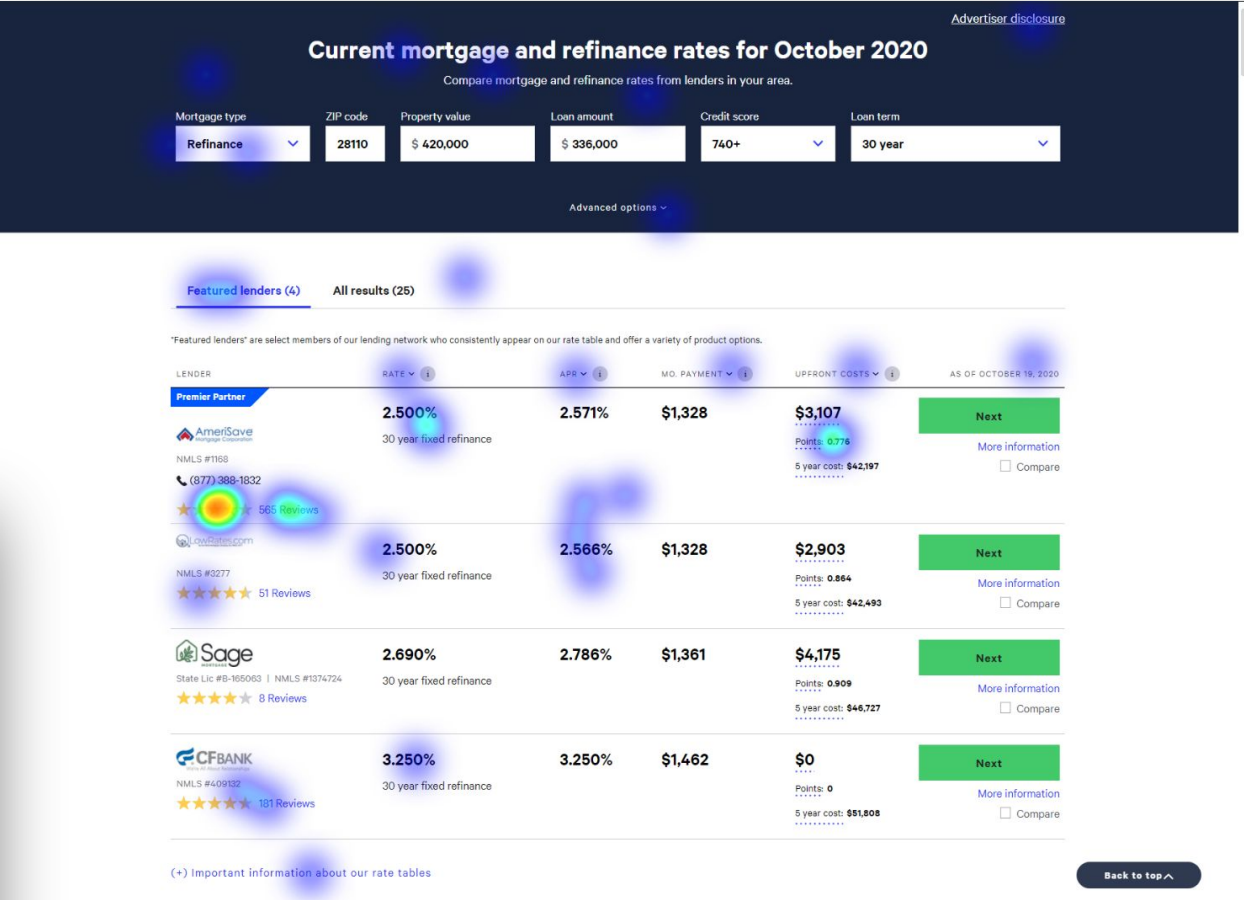
Social proofing led at 24.5%. Heat concentrates on a lender star rating and review count, the strongest single trust signal in the study.
Rates, APRs, and estimated payments drew clicks. Participants said they liked seeing them. But those numbers change once a user enters personal identifying information, and prior research had already established that this shift drives frustration and abandonment.
Two of the five sites tested displayed no numerical claims at all. Both landed at the bottom of the trust distribution by traffic, but neither exposed itself to a promise it could not keep. By not stating numbers up front, they under promised rather than over promised.
The implication runs against instinct. Showing competitive rates early feels like a trust builder. It is a deferred trust cost.
What else the data showed
Seven categories emerged from the 486 selections.
Social proofing led. Numerical ratings paired with review counts. Participants consistently described wanting to know what other people's experience had been before committing.
Filtering and sorting followed close behind. Participants said page level tools were the reason they visited these sites at all. The ability to experiment with the numbers themselves mattered more than being handed a number.
Educational content underperformed on raw selection but deserves weight beyond its share. Prior research had established that user education is among the strongest factors keeping a user inside an ecosystem, and staying in the ecosystem is the strongest predictor of conversion.
Recommendations delivered
Lead with multimodal social proofing
Combine numerical ratings, review volume, and color coded scoring at the mortgage landing page. Multimodal ratings give users quick, granular information that reduces decision paralysis.
Avoid contextual numbers that change after PII entry
Rates and pre approved loan amounts shift once a user identifies themselves. Displaying them early creates a promise the product cannot keep.
Provide landing page level filtering with education attached
Let users explore and experiment rather than being handed a single number. Exploration keeps users in the ecosystem, and staying in the ecosystem predicts conversion.
State why each lender earned its ranking
A ranked list with reasoning invites exploration. A ranked list without it reads as advertising.